
Learning Lives Here: Getting to know three institutions for higher ed in Downtown
It’s no secret that downtown Salt Lake City is jam-packed with inspired dining, live music, fascinating museums and creative, independent shops. Yet another, but perhaps less intuitive, reason people from across the country descend on this thriving urban core isn’t about being entertained—but to learn.
Violin Making School of America, 304 E. 200 South, vmsa.net

“In our field, there’s a saying,” says Thomas Bush, associate instructor at the Violin Making School of America (VMSA), “’all roads lead to Salt Lake.”
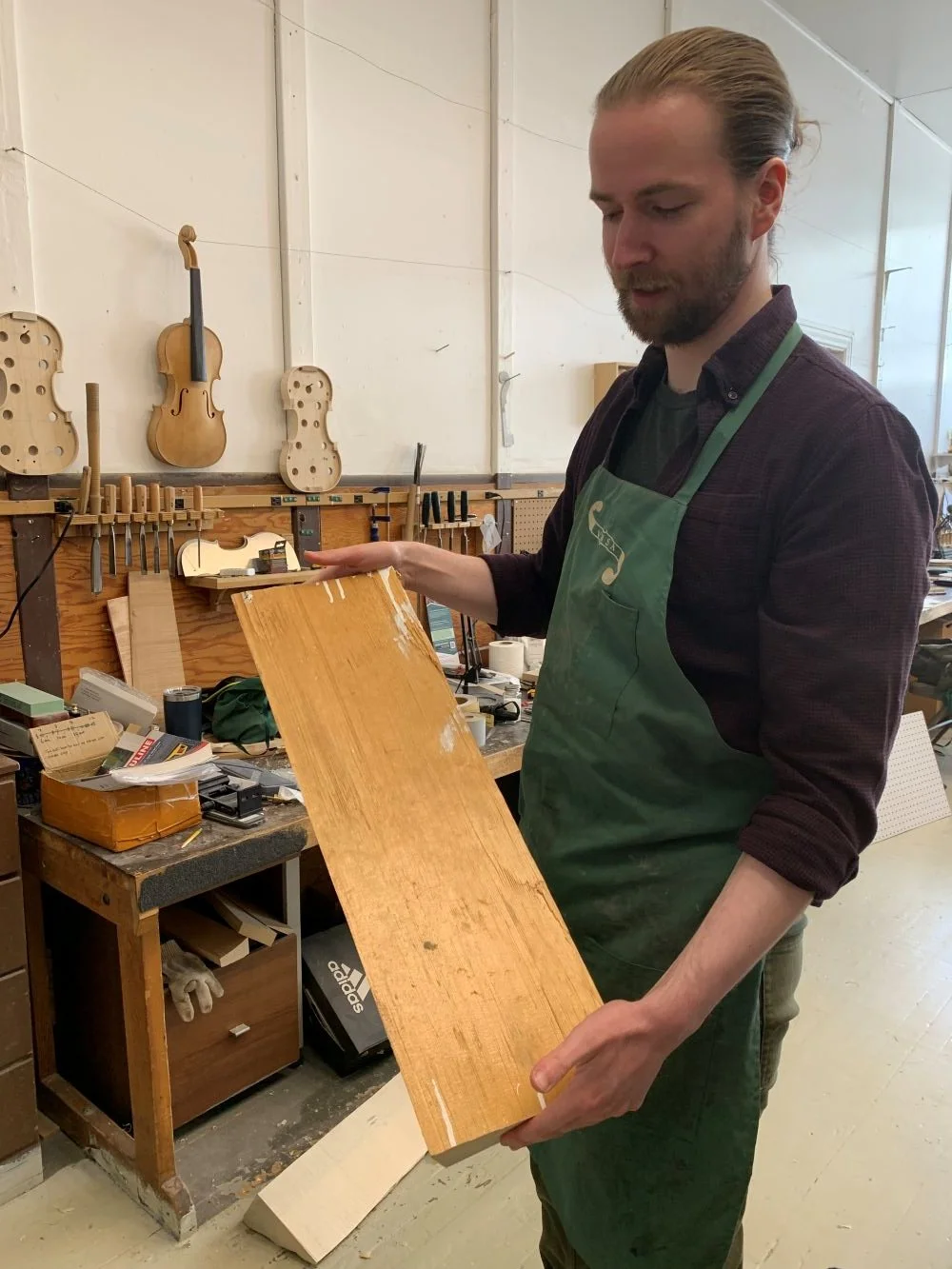
The road Thomas refers to began in 1972 when Peter Prier founded the world’s first violin making school outside of Europe in downtown Salt Lake City. He located the school in a building next door to his violin shop, which he opened in 1965. Both the shop and school remain in their original locations today.
Peter made his way to Salt Lake City after graduating from the State Violin Making School of Mittenwald Germany. In 2010, he told violinist.com that the prompt for opening a violin shop and making school in Utah was first, the mountains and, second, Salt Lake City’s dry climate. “The humidity level is very important to me,” Peter said. “For example, glue will dry in three to four hours in Salt Lake City. Go to New York or Philadelphia or Chicago and it takes days to do the same thing.”
Though Prier passed away in 2015, VMSA’s three-year violin making curriculum remains one of the U.S.’s most renowned, attracting prospective luthiers from around the world.
Enrollment typically hovers around 20 to 25 at any given time. Classroom coursework, taught in the school’s second-level classrooms, alternates with hands-on woodworking instruction and practice in VMSA’s wood-scented street-level shop.
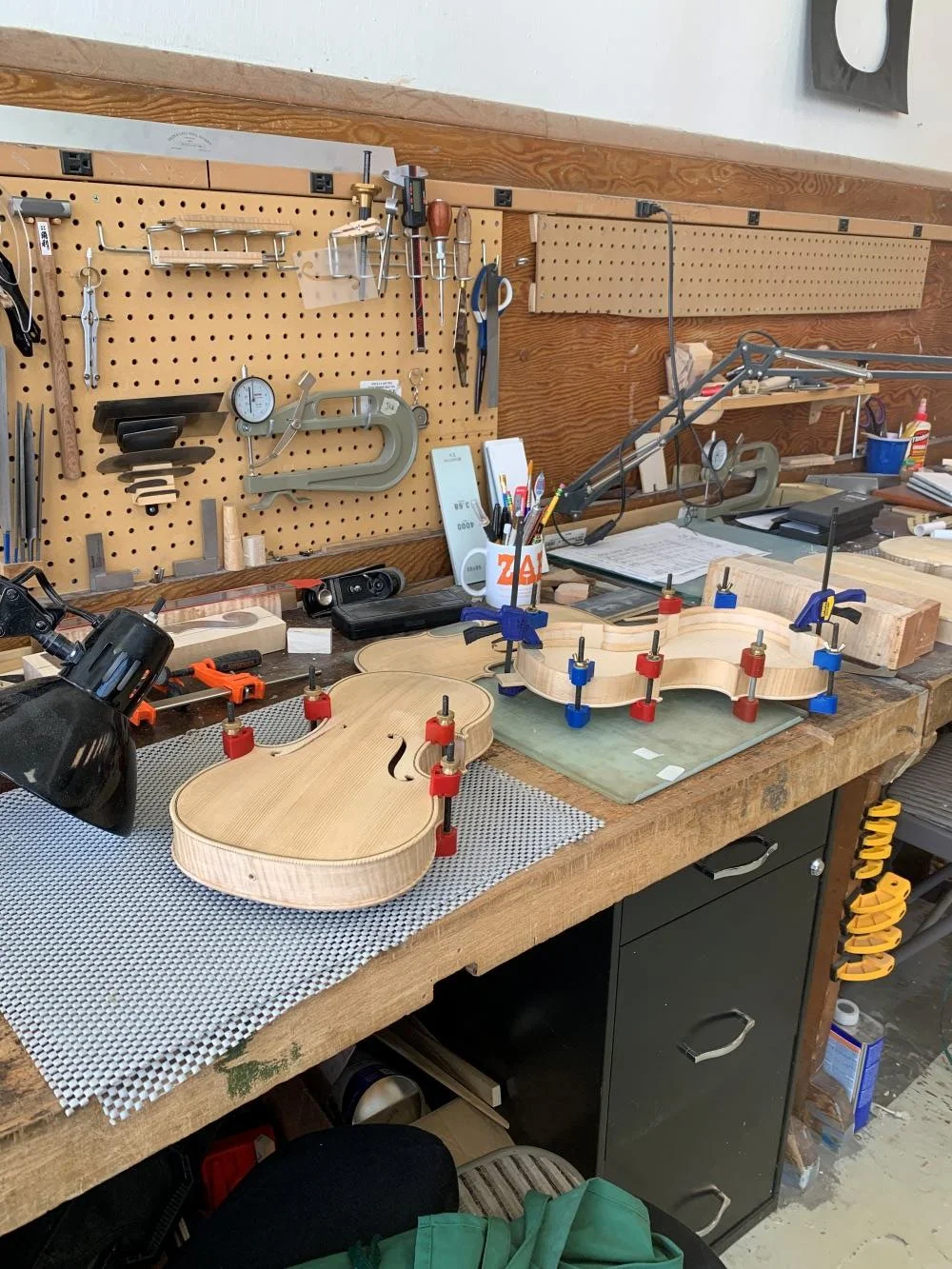
Students make three violins, a viola and a cello during their three-year course of study at VMSA. But before receiving a diploma, each is required to pass a final test of both mastery and speed: making two violins within three months. “That’s the professional standard,” says Bush, who graduated from VMSA in 2025 and now teaches at the benches where he once trained. His own final submission—a model based on the 1687 “Ole Bull” Stradivarius—achieved a level of decorative detail never before attempted by a VMSA student in the school’s 53-year history.
Along with its distinguished lineage, VMSA differs from other violin making schools in that students get to experience making a violin from its literal beginning. “One of the reasons I chose to teach at this school is because we take students up to the Uinta Mountains or to Colorado to harvest a spruce tree,” Thomas explains. Back in the shop, one spruce tree can become the top piece, or belly, for as many as 40 violins, paired with maple for the back, ribs and neck.
Another way the VMSA’s curriculum stands out from other violin making schools is that it includes instruction in varnish making, using raw materials like tree sap, oils and pigments. “Only our school teaches students how to make varnish from scratch,” says Sanghoon Lee, VMSA’s current owner and director, who also graduated from the school in 2004. “Lots of factors can impact varnish making, which is why most schools buy from varnish makers. The only part of the violin we don’t teach students how to make is the strings.”
As you might imagine, completing a violin making degree takes intense focus and dedication. “The curriculum requires students to be in school Monday through Friday, from 8 a.m. to 4 p.m., for three years,” Thomas explains. Those who do go on to graduate can expect to work for an established maker or shop for five to 10 years, doing repairs or assisting restorations, before they develop the skill level necessary to open their own violin making business.
Among the VMSA’s newest cohort is one student for whom the stakes likely feel personal: Peter Prier’s 26-year-old grandson, now stepping into the same narrow path his grandfather carved more than fifty years ago.
Heritage School of Interior Design, 159 W. Broadway, heritageschoolofinteriordesign.com
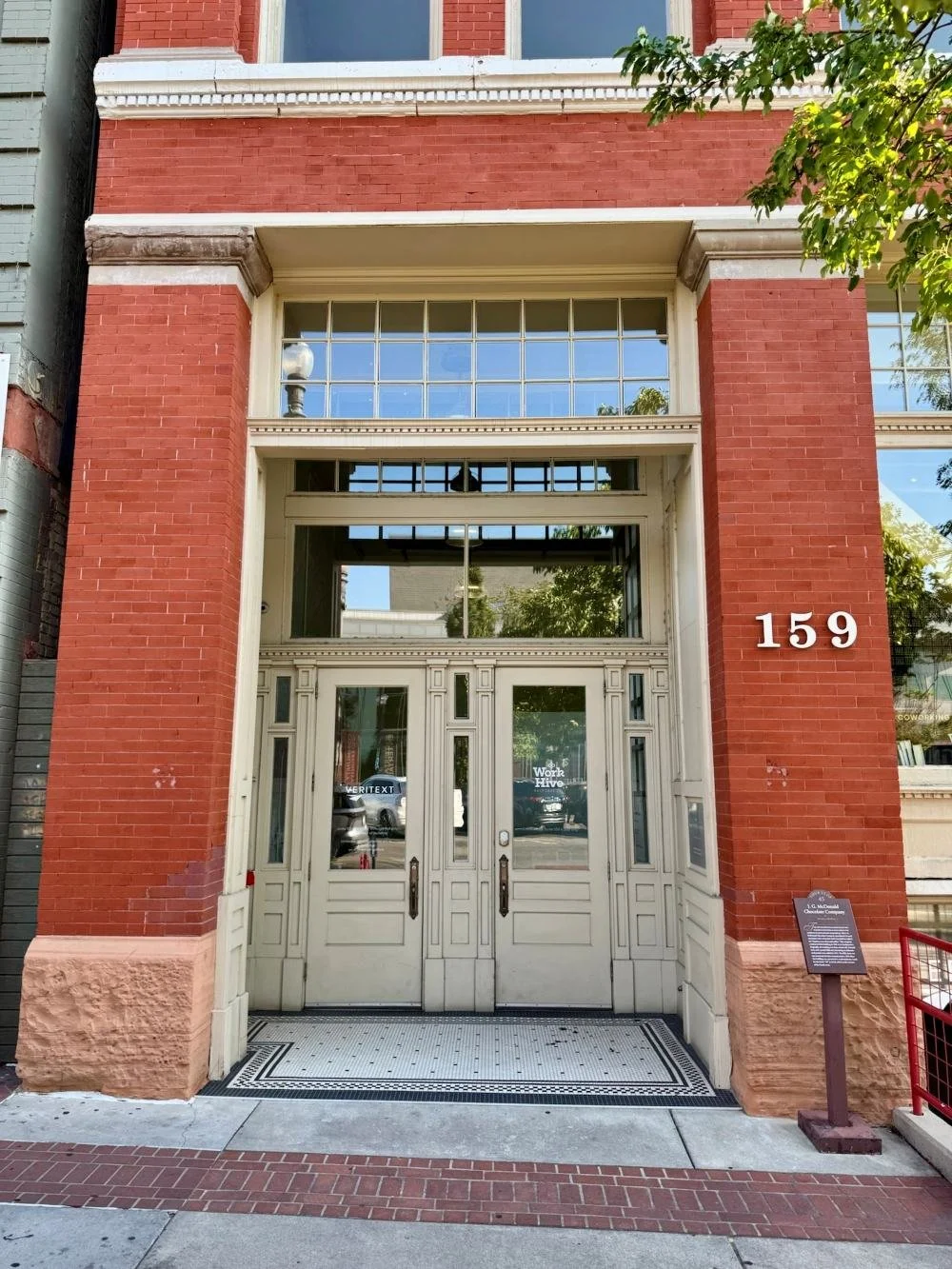
The morning light casts an amber glow on the J.G. McDonald Chocolate Company Building’s brick facade as I pass through its airy split-level entry. At the top of a short flight of stairs, I’m greeted by Bridget Meiners, owner and executive director of the Heritage School of Interior Design (HSID) Utah, the historic building’s primary tenant. “I really wanted to be downtown but wasn’t sure we could afford to be here,” she tells me. “But then when I found this space and talked to the owner, I was thrilled to find out it would work in our budget. I think it’s wonderful for our students to come downtown where we have access to so much inspiring design.”
A hands-on, accelerated education for aspiring interior designers looking for an alternative to a traditional multi-year design degree has defined HSID since its 1996 founding in Portland, Oregon. Entrepreneur and designer Stephanie Thornton Plymale purchased the school in 2014 and expanded HSID’s programs and locations while maintaining its immersive ethos. “All of our certificate programs are offered on an in-person basis. This is such a hands-on career, I feel that students really need our instructors to guide them in a face-to-face format,” Meiner explains when asked about online learning. “Plus coming downtown makes it easier to do our weekly field visits, which last week was a tour of the Asher Adams Hotel.”

Design Library
Interior design certifications offered by HSID Utah take three to six months to complete. Its Interior Design Fundamentals certificate, available with or without a technical course add-on (AutoCAD, SketchUp, Adobe Suite or Revit) can be finished in one term. The Residential Design Master’s Certification takes two terms to complete. And the Residential & Commercial Design Master’s Certification spans three terms. “Each program is designed to prepare students with the tools and connections they need to hit the ground running when they graduate. They learn how to use industry-standard design software, set up trade accounts, and build their portfolio while learning from our instructors, all of whom themselves are fulltime designers,” Meiner says.

For Utah native Camille Overmoe, currently working on a master’s certification at HSID Utah, the design school’s career-focused approach is exactly what she was looking for. “I graduated from the University of Utah with a communications degree in 2015 and more recently, worked as a creative project manager for a graphic design studio, where I absorbed a significant understanding of design principles,” Camille says. “When the Heritage School of Interior Design came to Utah, I immediately saw it as the perfect fit for me. The program's time commitment and its focus on industry-specific knowledge—rather than general education I already held—met my exact needs. It’s been the most affirming and rewarding career decision I have made to date.”
HSID’s downtown Salt Lake City campus is the design school’s fifth location. Others are in Portland, Oregon; Seattle; Denver; and Dallas. After earning a bachelor’s degree in social science (on a full-ride basketball scholarship), Bridget spent 18 years raising her family as a stay-at-home mom. During that period, she worked closely with an interior designer to build her family’s dream home. “That experience sparked my curiosity and passion for the design profession,” she says. Soon after she discovered HSID, where she completed a Master’s level certification program and then went on to launch her own design firm. And then when Bridget was asked to open the school’s fifth location in Utah last year, she jumped in with both feet. “There’s so much amazing design talent in Utah,” Bridget says. “My goal is for [HSID] to be a bridge between our students and the interior design industry.”
Neumont University, 143 S. Main Street, neumont.edu
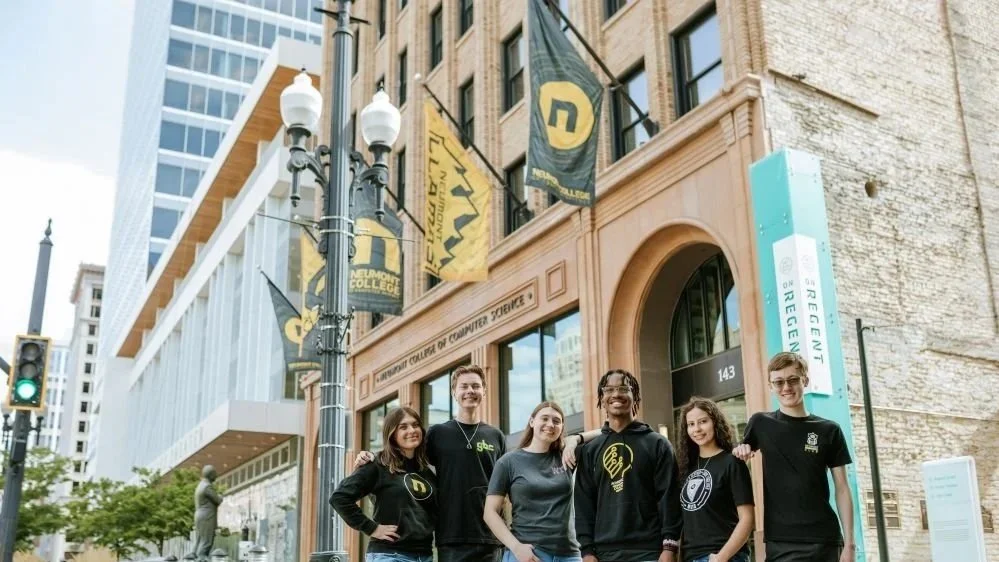
It’s easy to assume that, here in Utah, to experience the distinctive energy found only on a college campus, you’d need to visit the U of U, BYU or Utah State. But on a recent Friday afternoon, that expectant, joyful and very-much collegiate vibe was on grand display at downtown Salt Lake City’s Neumont University, abuzz that day with FReX, i.e. Freshman Experience, the college’s signature prospective student weekend. “We partner with Little America to host accepted freshmen and their families so they can see what life on our campus is all about,” explains Rob Duane, Neumont University vice president of marketing.
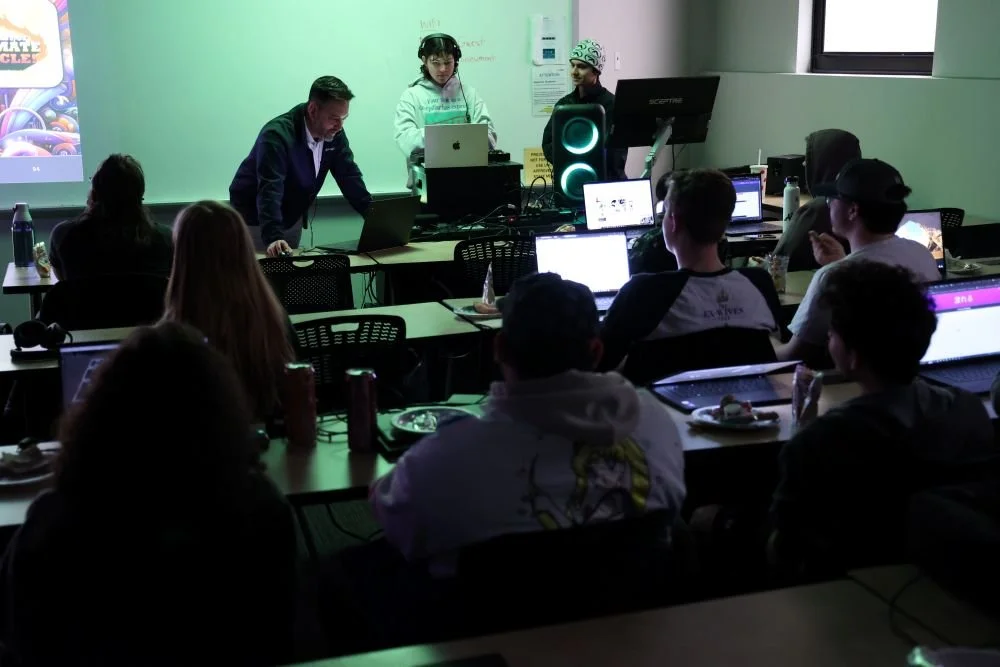
This small, private Neumont University was founded in 2003 in South Jordan with one two-year computer science degree as its singular offering. Since then, the school relocated to downtown Salt Lake’s historic Tribune Building, switched its accreditation to the more prestigiousNWCCU, updated to a 3 year program, changed its name from ‘Neumont College of Computer Science’ to ‘Neumont University,’ and added to its bachelor’s degree in Computer Science with degrees in Information Systems & Cybersecurity; Software Engineering; Software & Game Development (its most popular); and its two newest degrees, AI Engineering and Applied AI & Date Engineering. All undergraduate learning is held in-person, except for its Cybersecurity & Data Protection Certificate and a master’s degree in Applied Artificial Intelligence, both of which are earned through online instruction. “Every degree is very project based,” Rob says, “and students can expect to start coding on day one.”
The academic year at Neumont University is formatted on a compressed quarter schedule, with each new year beginning in October and no extended breaks during the summer, meaning most students earn an undergraduate degree in three years versus four. Students also get the well-rounded benefits of a bachelor’s degree, with English, communications, mathematics, science, humanities, etc. classes being required and/or offered to fulfill each degree’s general education requirements.
Bridging the transition between education and a career is emphasized within each degree program at Neumont University as well. During their final three quarters, or senior year, students join an Enterprise Project group, a 10-week immersive experience where they are partnered with a local or national company to develop, test, and present a real-world technical project aligned with their field of study. “Oftentimes those companies end up hiring the grads assigned to their teams,” Rob says.
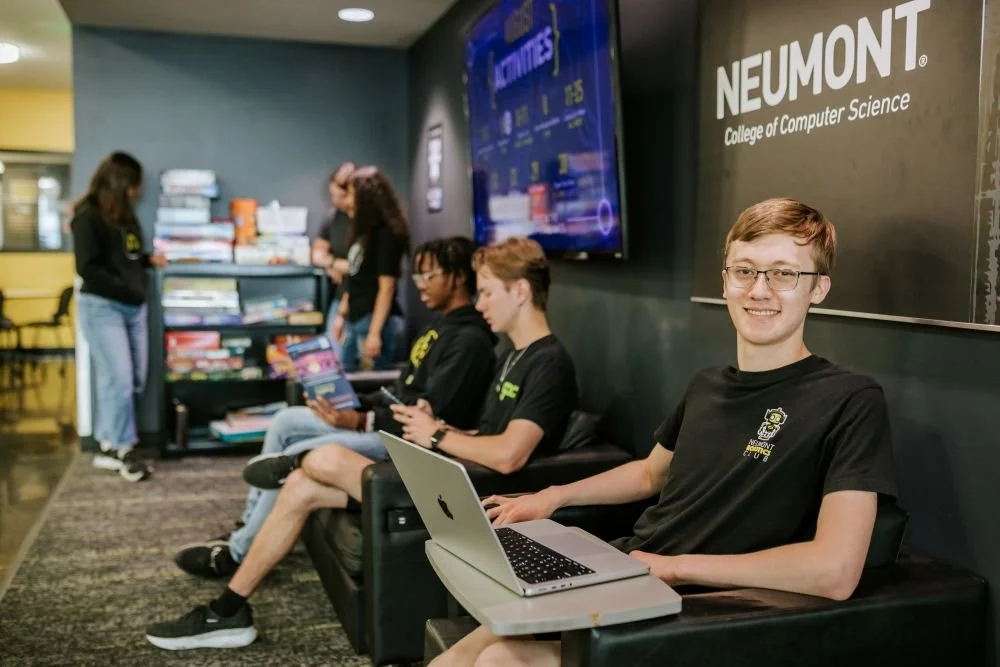
Beyond academics and career prep, the Neumont experience includes many of the social aspects prospective college students expect when they go away to college (83 percent of the 400-person student body come from outside of Utah), but in a more tech-specific way. For example, rather than a football team or fraternities, Neumont maintains a strong E-sports team, participated in by 10 percent of all students. The university’s single-building campus promotes student interaction as well. The first four floors are occupied by classrooms, student common areas and faculty and administration offices; floors five through 11 were converted into 42 fully furnished apartments for housing Neumont students exclusively. “It’s great for our students to be located downtown, close to public transit and lots of things to do,” Rob says, “and the City Creek Mall food court has become the school’s de facto cafeteria.”
Sarah Nutt, a Neumont University student ambassador from Hot Springs, Arkansas, says though she always had an interest in computer science, “my grandfather was an engineer at NASA,” it wasn’t until she took a coding class in high school that she considered studying technology in college. “The class was working in HTML, and I was able to actually build something decent, and so my teacher suggested that maybe I’d be interested in going to Neumont.”